Shingan-ji Sanada Yukimura's grave
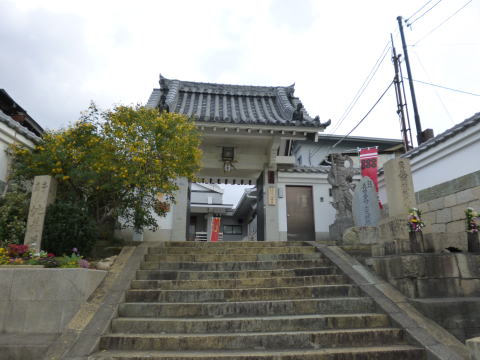
Sanadayama Shingan-ji is a Jodo-sect temple located in Tennoji Ward, Osaka
City.
Its principal image is a seated statue of
Amida Buddha, and the temple is one of the stops on the "Osaka New
48-Temple Amida Pilgrimage."
In 1622, the priest Hakumu erected the
temple buildings to pray for the repose of the souls of the Sengoku-period
warrior Sanada Yukimura and his father.
The temple's emblem since its founding has
been the Sanada family's "Six Coins" (Rokumonsen) crest, which is
also carved in relief on the doors of the current main gate.
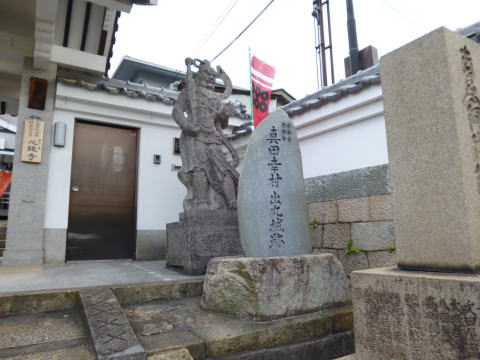
The site is said to be where the
"Sanada-maru" (Sanada Barbican)—a fortification defended by Sanada
Yukimura during the Winter Siege of Osaka—was constructed; a stone monument
reading "Sanada Yukimura: Sanada-maru Site" stands in front of the
gate.
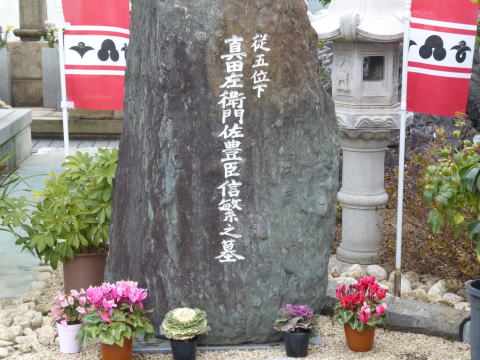
The temple grounds contain Sanada Yukimura's grave; the headstone, erected
to mark the 400th anniversary of his death, bears the inscription: "Grave
of Sanada Saemon-no-suke Toyotomi Nobushige (Junior Fifth Rank, Lower Grade)."
The name "Sanada Yukimura" only
came into widespread use during the mid-Edo period (18th century), more than a
century after his death; in his last surviving letter, he signed his name as
"Saemon-no-suke Nobushige."
The surname "Toyotomi" was established by Toyotomi Hideyoshi;
in addition to relatives such as Hidenaga, powerful daimyo—including Mori
Terumoto and Tokugawa Hidetada—also used the name.
A five-minute walk from Tamatsukuri Station
on the Osaka Municipal Subway.
Six coins (Rokumon-sen) crest
The Sanada clan of Japan's Sengoku and Edo periods used the "Rokumon-sen" (六文銭) as their family crest, which depicts six coins.
The meaning behind this crest is linked to a traditional belief in the
afterlife.
In Japanese Buddhist tradition, it was thought that when a person died,
they needed six coins to pay the ferryman to cross the Sanzu River, which
separates the living world from the afterlife.
By adopting the six coins as their crest, the Sanada clan symbolized their readiness for death, indicating their fearlessness in battle.
It was a declaration that they were always prepared to face death with
honor and would fight bravely without hesitation.
This strong connection to bravery and acceptance of mortality made the
Rokumon-sen a fitting symbol for the Sanada clan, known for their courage
and resilience.